Skincare OEM Custom Formulation vs Private Label Explained: A 2026 Guide for Global Brand Owners
If you are launching or scaling a skincare brand in 2026, one of the first strategic decisions you will face is choosing between OEM custom formulation and private label manufacturing. The difference may seem technical, but it directly impacts your brand's differentiation, budget, timeline, and long-term scalability. This guide provides a clear skincare OEM custom formulation vs private label explained comparison, with real-world MOQs, lead times, certification requirements, and actionable advice for global brand owners and procurement managers.
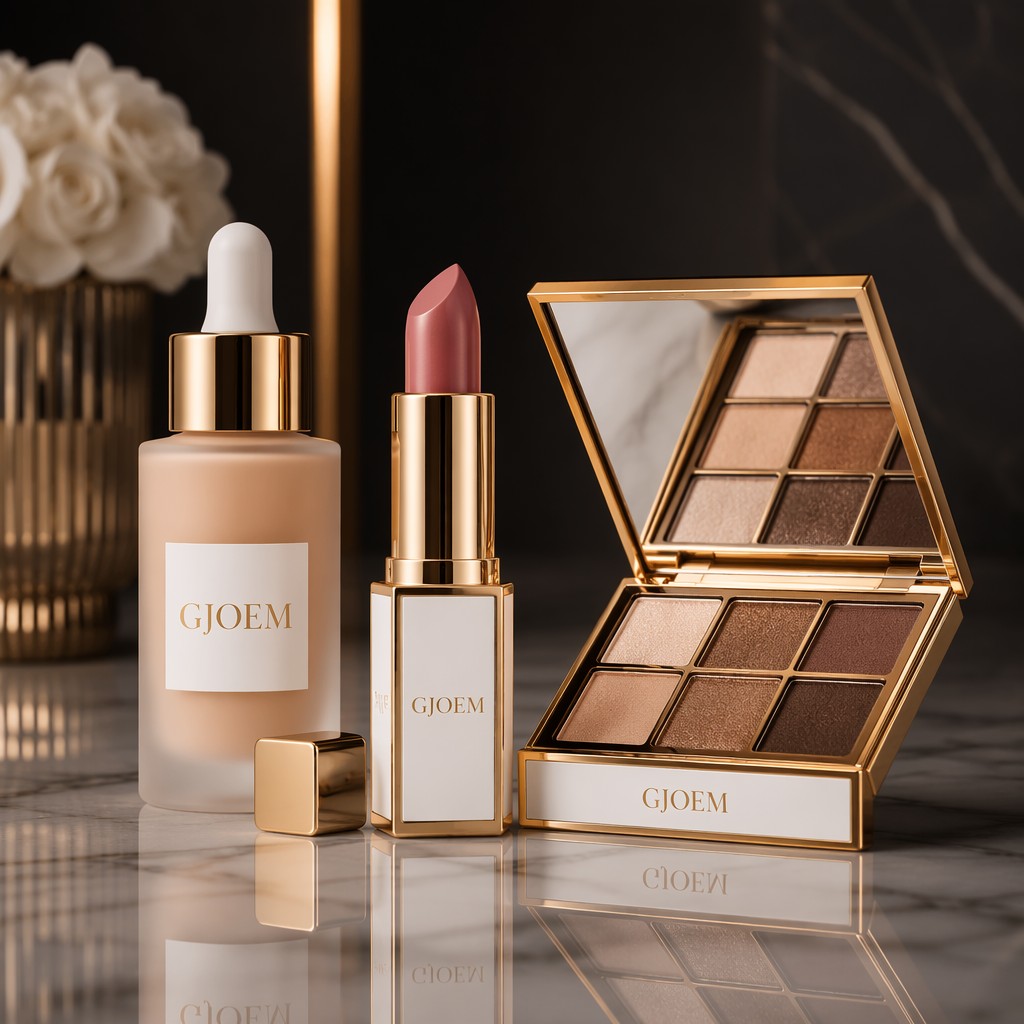
At wwoem, a China-based cosmetics OEM/ODM manufacturer, we work with hundreds of brands each year. We have seen firsthand how the wrong manufacturing model can drain budgets and delay launches. By the end of this article, you will know exactly which path fits your business.
What Is Private Label Skincare Manufacturing?
Private label manufacturing means you select from a supplier's existing catalog of pre-developed, pre-tested formulas. The manufacturer already has the formula, stability data, and often the packaging options ready. Your brand's role is to choose the formula, customize the label and outer packaging, and place an order.
Key characteristics of private label:
- Formulas: Stock or semi-stock, already compliant and tested.
- MOQ: Typically 1,000–3,000 units per SKU, though some suppliers offer as low as 500 units for simple products.
- Lead time: 15–30 days for production after sample approval, plus shipping.
- Cost: Lower upfront investment because R&D is shared across many clients.
- Differentiation: Limited—other brands may use the same base formula.
Private label is ideal for startups, influencer brands, and companies testing a new market with minimal risk.
What Is OEM Custom Formulation?
OEM (Original Equipment Manufacturer) custom formulation means you work with the manufacturer's R&D team to develop a unique formula from scratch—or heavily modify an existing base—to match your exact specifications. You own the formula (or have exclusive rights), and it cannot be sold to other brands.
Key characteristics of OEM custom formulation:
- Formulas: Unique, developed around your active ingredients, texture, scent, and claims.
- MOQ: Higher, typically 5,000–10,000 units per SKU, though some manufacturers negotiate down to 3,000 for simple emulsions.
- Lead time: 45–90 days for R&D, stability testing, and production. Add 2–4 weeks for packaging sourcing.
- Cost: Higher upfront—R&D fees range from $3,000 to $15,000+ depending on complexity.
- Differentiation: High—you can patent or protect your formula and build a unique brand story.
OEM custom formulation is best for established brands, premium lines, and companies with a clear product vision and the budget to support it.
Skincare OEM Custom Formulation vs Private Label Explained: Key Differences at a Glance
To make the skincare OEM custom formulation vs private label explained comparison concrete, here is a side-by-side table:
| Factor | Private Label | OEM Custom Formulation |
|---|---|---|
| Formula ownership | Manufacturer | You (or exclusive license) |
| MOQ per SKU | 500–3,000 units | 3,000–10,000 units |
| R&D cost | $0–$1,000 (sample fees) | $3,000–$15,000+ |
| Lead time (first order) | 3–6 weeks | 8–16 weeks |
| Differentiation | Low to medium | High |
| Regulatory support | Standard documentation | Custom safety assessments, claims substantiation |
| Best for | Startups, test launches | Established brands, premium lines |
How to Choose the Right Model for Your Brand
Choosing between private label and OEM custom formulation depends on your budget, timeline, and brand positioning. Ask yourself these questions:
- What is my budget? If you have under $10,000 for your first production run, private label is likely the safer choice. OEM custom formulation requires deeper pockets for R&D and higher MOQs.
- How unique does my product need to be? If you are entering a crowded category like basic moisturizers, private label may suffice. If you have a proprietary active or a novel texture, OEM is worth the investment.
- What is my timeline? Need to launch in 8 weeks? Private label. Can you wait 4–6 months? OEM custom formulation gives you a stronger long-term asset.
- Do I need regulatory support? For markets like the EU or US, OEM manufacturers often provide more comprehensive documentation, including ISO 22716, GMP, and FDA registration support.
- What is my exit strategy? If you plan to sell your brand, owning a unique formula increases valuation.
For a detailed breakdown of costs and MOQs, see our guide on Cosmetics OEM MOQ and Pricing: New Brand.
Common Mistakes to Avoid
Many brand owners make costly errors when choosing a manufacturing model. Here are the most common pitfalls:
- Underestimating MOQs: Private label MOQs can still be 1,000+ units per SKU. If you have 5 SKUs, that is 5,000 units minimum. Plan your cash flow accordingly.
- Ignoring certification requirements: Not all manufacturers hold ISO 22716 or GMP. For global distribution, you need a partner with these certifications.
- Assuming OEM is always better: OEM custom formulation is not inherently superior. For a fast, low-risk launch, private label is often the smarter business decision.
- Forgetting about packaging MOQs: Custom packaging often has its own MOQs (5,000–10,000 units), which can exceed the formula MOQ.
- Not asking about formula exclusivity: With private label, always confirm whether the formula is exclusive to you or sold to others.
Questions to Ask Your Potential Supplier
Before signing a contract, ask these questions to avoid surprises:
- What is your MOQ for private label vs OEM custom formulation?
- What certifications do you hold? (ISO 22716, GMP, FDA, etc.)
- What is the lead time for a first order and for reorders?
- Do you provide stability testing and compatibility testing?
- What are your payment terms? (Typically 30% deposit, 70% before shipment.)
- Can you provide references from other brands in my target market?
- Who owns the formula in an OEM project?
- What is your process for handling quality issues or recalls?
For more due diligence tips, visit our Knowledge Center.
Why wwoem Is a Trusted Partner for Both Models
wwoem offers both private label and OEM custom formulation services for skincare, makeup, perfume, and personal care. Our facility is ISO 22716 and GMP certified, and we support FDA registration for US-bound products. With MOQs starting at 1,000 units for private label and 3,000 units for custom formulation, we help brands of all sizes launch successfully.
Whether you need a quick private label run or a fully custom anti-aging serum, our R&D team works with you from concept to shelf. Contact Us to discuss your project.
Conclusion
Understanding skincare OEM custom formulation vs private label explained is essential for making a smart manufacturing decision. Private label offers speed, lower MOQs, and reduced risk—ideal for startups and test launches. OEM custom formulation delivers uniqueness, formula ownership, and higher brand value—best for established brands with a clear vision and budget. Evaluate your goals, ask the right questions, and choose a manufacturer that supports your growth. With the right partner, either model can lead to a successful skincare brand in 2026 and beyond.
Ready to Start Your wwoem Project?
Get a free quote within 24 hours. Low MOQ, global shipping, ISO 22716 certified.
Get Free Quote